The new TV is bigger than the old one, the dresser is too small, and on the wall it would look like a catalogue. Mounting a TV looks simple, but the wrong bracket or plugs can cost you the TV. Here's what to check before drilling.
Short answer
You need a bracket that matches your TV's VESA pattern and weight, plugs suited to your wall type, and a carefully measured height. For drywall, large TVs or swivel brackets, it's better to call a handyman.
Need a pro right away? Book a handyman in the MostApp app and pick a time.
Choosing a bracket
- VESA pattern: the hole spacing on the back of the TV (e.g. 200×200 or 400×400), listed in the manual. The bracket must support it.
- Load rating: the bracket must hold the TV's weight with margin.
- Type: fixed, tilting or swivel. Swivel brackets put the most load on the wall.
Which plugs for which wall
- Concrete: the safest wall, but needs a hammer drill and good plugs.
- Brick and block: good load capacity, but hollow brick needs plugs for hollow materials.
- Drywall: ordinary plugs won't hold. You need drywall anchors or fixing to the metal frame. This is the riskiest case.
Height and cables
The center of the screen should be at eye level when seated. Tape a TV-sized sheet of paper to the wall and sit on the sofa for a few minutes. Make sure there's no wiring where you drill; cables often run vertically above and below outlets. Hide cables in a trunking strip; a new outlet behind the TV is a job for an electrician.
When to call a handyman
- The wall is drywall or you don't know what it's made of.
- The TV is large and heavy, or the bracket swivels.
- You don't have a hammer drill or spirit level.
- You want the cables hidden.
What the handyman does
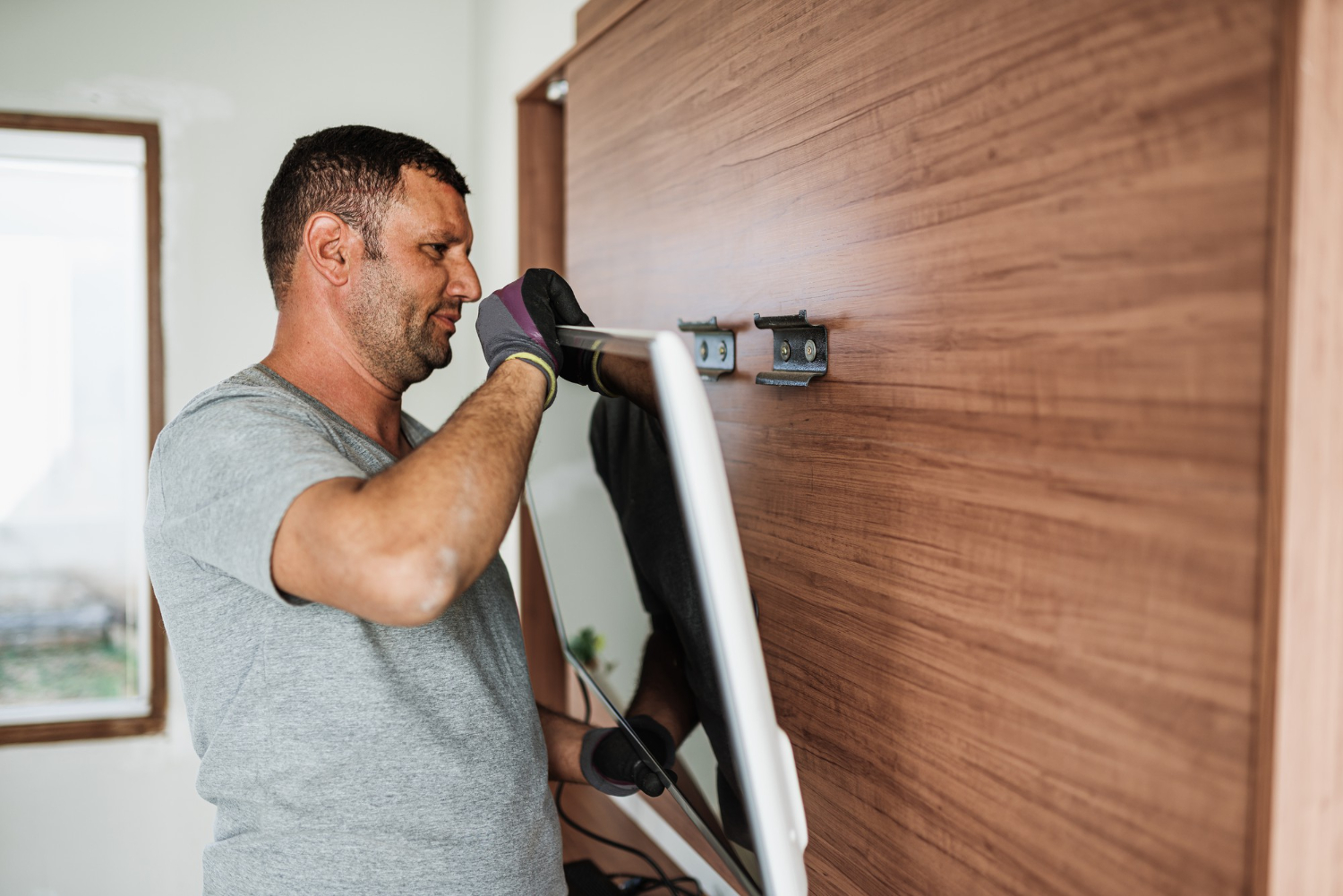
The handyman checks the wall, chooses plugs, drills, levels the bracket, hangs the TV and tidies the cables. Since it's a short job, add other small tasks to the same visit: shelves, curtain rails, pictures. On MostApp you see the hourly rate before you send a request.
Book a handyman on MostApp